
How your system works, what to keep off your drainfield, and how often to pump. The basics, from the team that does the work.
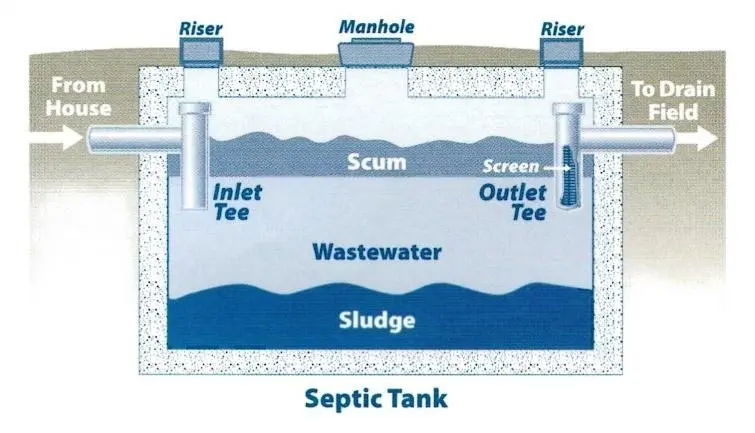
A septic system is an economically efficient and environmentally safe way to dispose of domestic wastewater. It uses natural processes to decompose solids and treat wastewater before it returns to the environment.
A typical system has an inlet pipe from the home, a septic tank, a drainfield and soil. Heavier solids settle as sludge, lighter solids, grease and oil float as scum, and the liquid effluent flows to the drainfield for treatment by the soil. Compartments and a T-shaped outlet pipe keep sludge and scum out of the drainfield.
It depends on usage. The Department of Health recommends every 3 to 5 years, the EPA every 3 years, and the Water Management District every 2 to 3 years.
Pumping every 3 to 5 years is typically enough for most homes. Households with more people living together, for example during the holidays, may need pumping more often. Our standing recommendation for high-usage homes is every 2 to 3 years.
If the water level in the tank is above the bottom of the outlet, the drainfield may have at least six inches of ponding and could be showing early signs of failure. Call us.
Clean your filter every 6 to 12 months, depending on usage. There is no conclusive evidence that enzyme products extend the life of a system. Aerobic treatment systems need a specific balance of bacteria and food, which normal household use provides.
The type of system, drainfield size, soil, depth to the water table, limiting layers, fill and disposal requirements, site access, setbacks from wells and buildings, and overall complexity all affect cost. We discuss these with you on site.
Usually not for long. Most of the time, your facilities are back in use within a few hours of the job starting.
No. Roots from trees and shrubs can damage and clog the drainfield, which leads to a costly repair.
Contact us for a free consultation and estimate. For a 24-hour emergency, call right away.